Protection
Exposure to weather and surroundings
OpenFaired
KARBIKEProtective cabin
 Äerdschëff asblMOBILAB Greater Region · territorial action researchPartner workspace
VLI // light intermediate vehicles
Light intermediate vehicles aim to carry people or loads with far less mass than a car. Their value depends not only on the vehicle but on the system of use that makes it practical.
01 · UNDERSTAND
A light intermediate vehicle is a vehicle significantly lighter than a car, designed to meet specific travel or transport needs with lower material and energy consumption. It may fall into several regulatory categories.
Forms of light intermediate vehicles overlap. Fairing, number of wheels and carrying capacity are characteristics that can be combined. The Karbike's position is shown here as an example of how to read the matrix.
Exposure to weather and surroundings
Number of wheels and behaviour at a standstill
People, luggage or work-related loads
SOUTHERN LUXEMBOURG · POTENTIAL TO EXAMINE
time · safety · weather · load · parking · habits
These national data indicate potential for investigation. They demonstrate neither a vehicle's suitability nor its ability to replace a car in a given case. The full public source is provided below.
02 · CHARACTERISE
The right question is not “Do we need a light intermediate vehicle?” but “Which journey, constraint and service are we trying to make possible?”
Repeated tasks, short rounds and carrying light loads.
Journeys of 2 to 12 km where parking or access is constrained.
First and last kilometre in a multimodal travel chain.
A possible alternative to a second car for some accompanied journeys.
Access to services, activities or local support.
03 · THINK IN SYSTEMS
A recurring need and a plausible substitution.
A safe or realistically securable continuous route.
Explicit availability and responsibilities.
Parts, skills, lead times and a withdrawal procedure.
Criteria, budgets and review clauses.
Use + route + service + maintenance + governance
If one building block is missing, the system remains incomplete.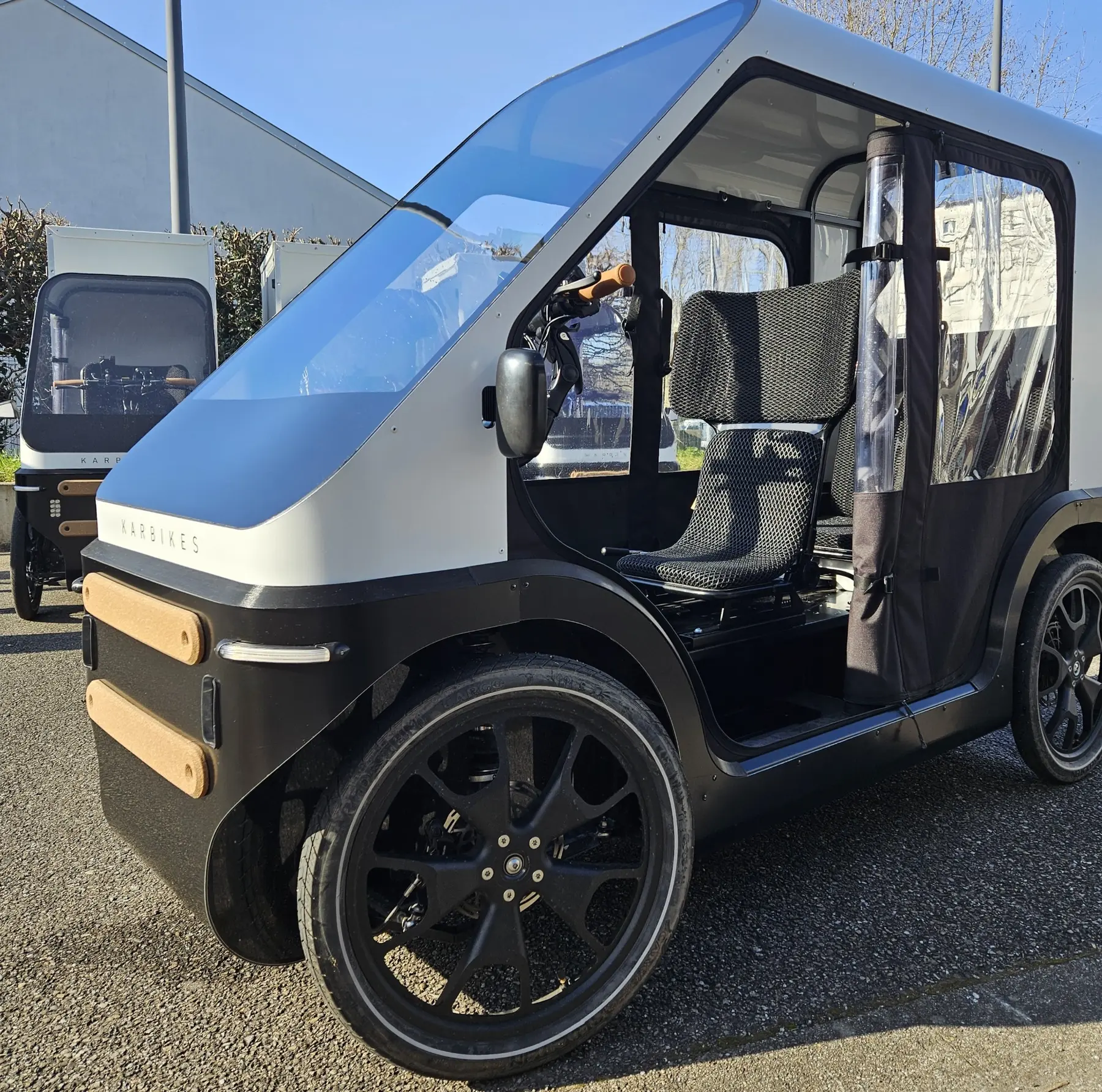 KARBIKE // MODULAR PLATFORM
04 · RESEARCH OBJECT
Designed and assembled in Strasbourg, the Karbike is an electrically assisted cargo bike with bodywork and four wheels. Its platform can accommodate family, professional or logistics configurations.
Manufacturer-stated specifications, to be checked for each vehicle and configuration. The 25 km/h limit concerns assistance, not a category common to all light intermediate vehicles. A 45 km/h option requires a separate assessment before any cross-border trial. Read the Karbikes FAQ.
THREE CURRENT CONFIGURATIONS
Specifications vary by model. In MOBILAB Greater Region, each configuration is considered a hypothesis to test, not a predetermined solution.
An adjustable bench seat for one adult or two children, and a boot designed for family use.
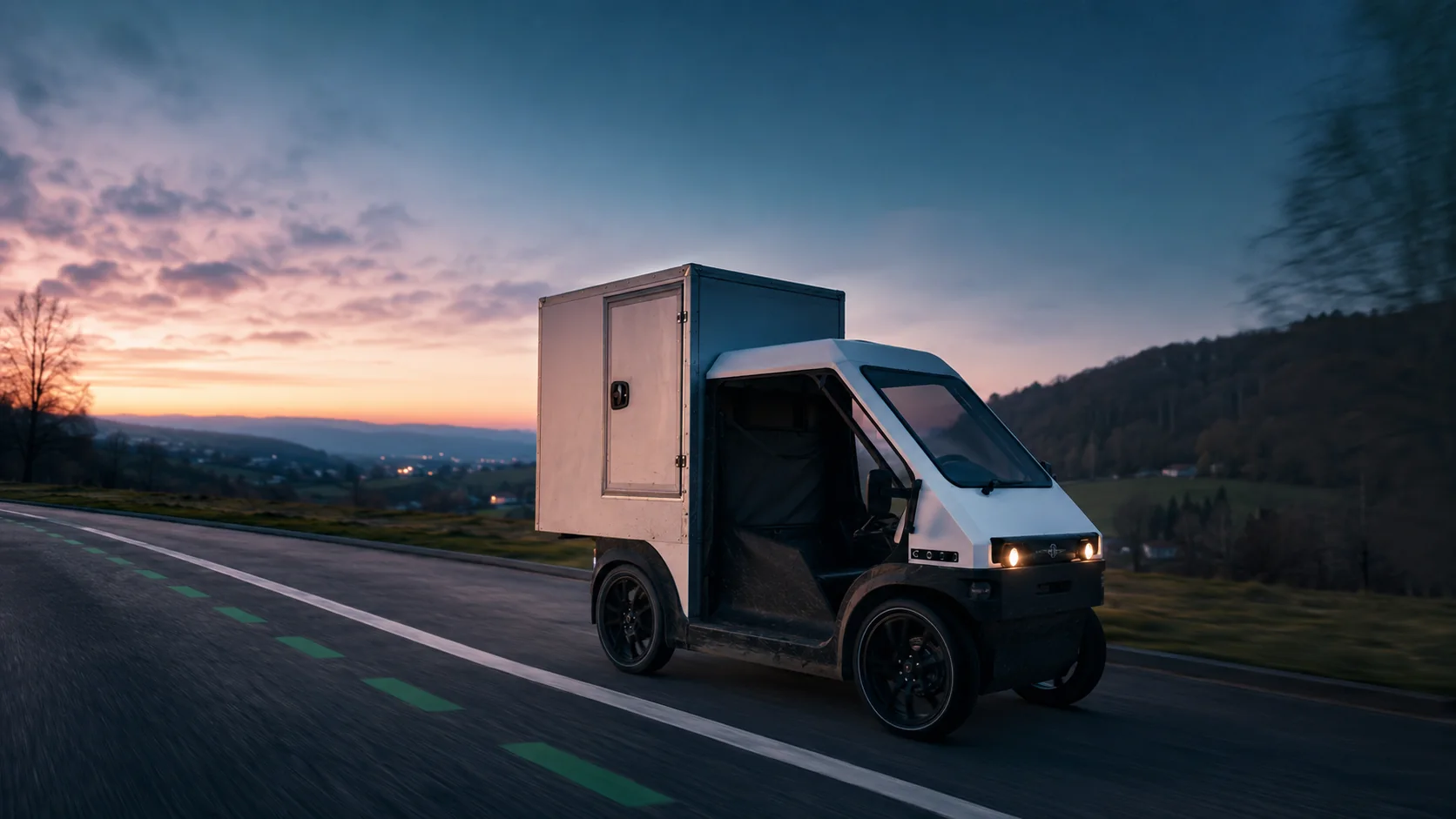
A closed 500-litre box for rounds, equipment and work in urban areas.
A 1,000-litre box and a customisable platform for varied loads and trades.
05 · WATCH AND COMPARE
A chronological selection follows the journey from prototype to pre-production, then to configurations for everyday and professional use.
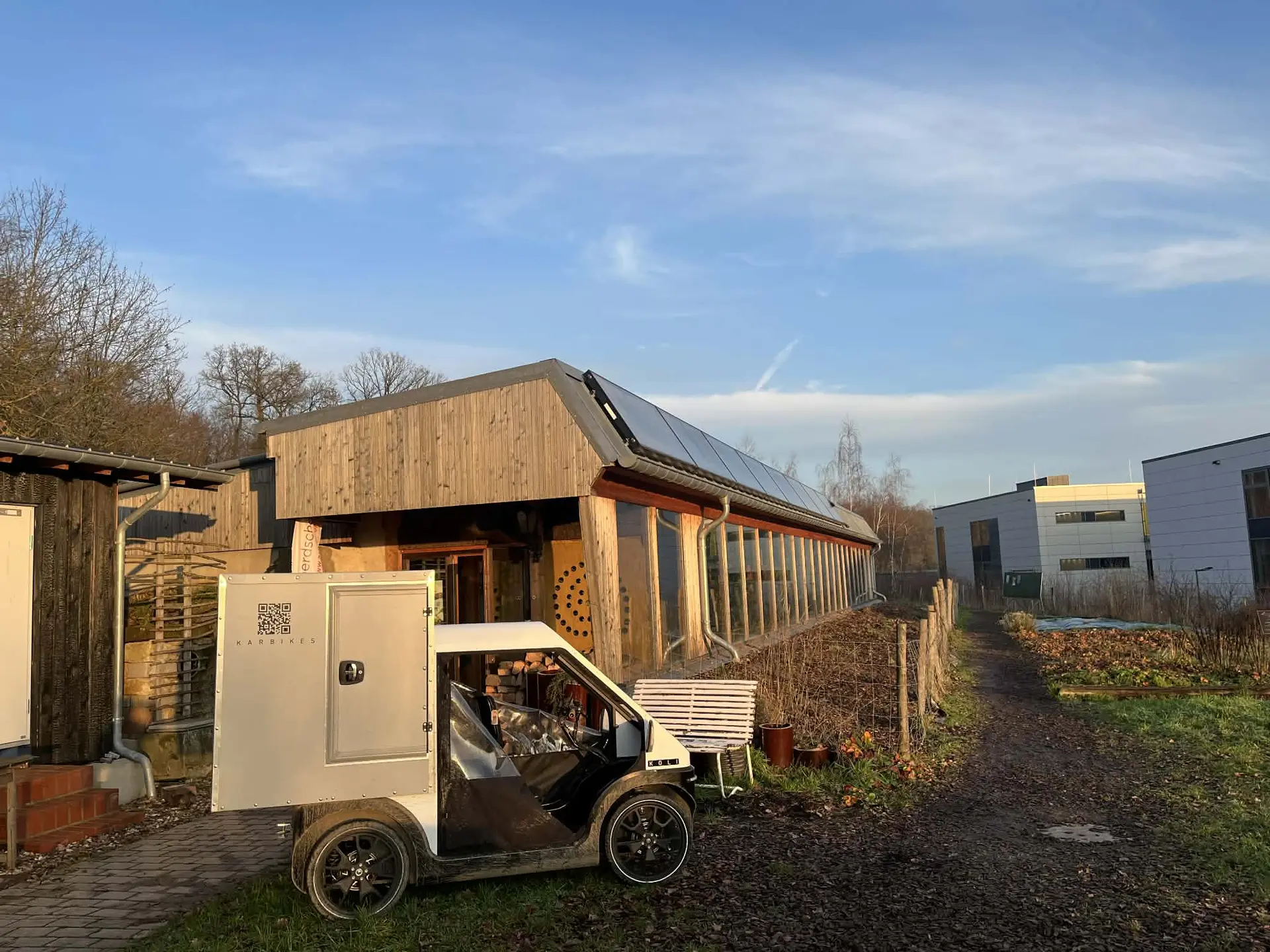
The Karbike becomes the starting point for an inquiry into uses, territories and sufficiency.
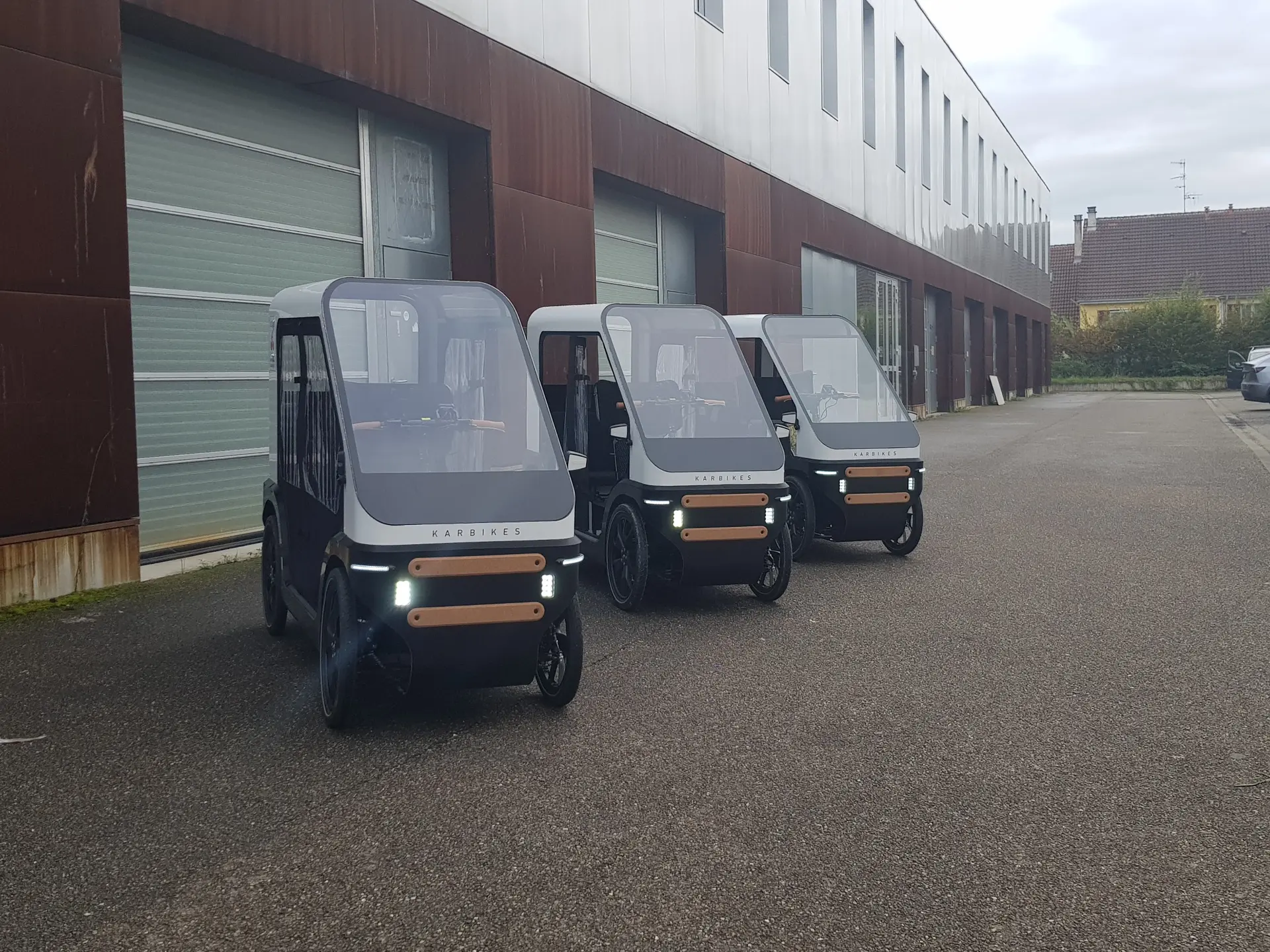
Presentation of the professional model and its configurations for urban services.
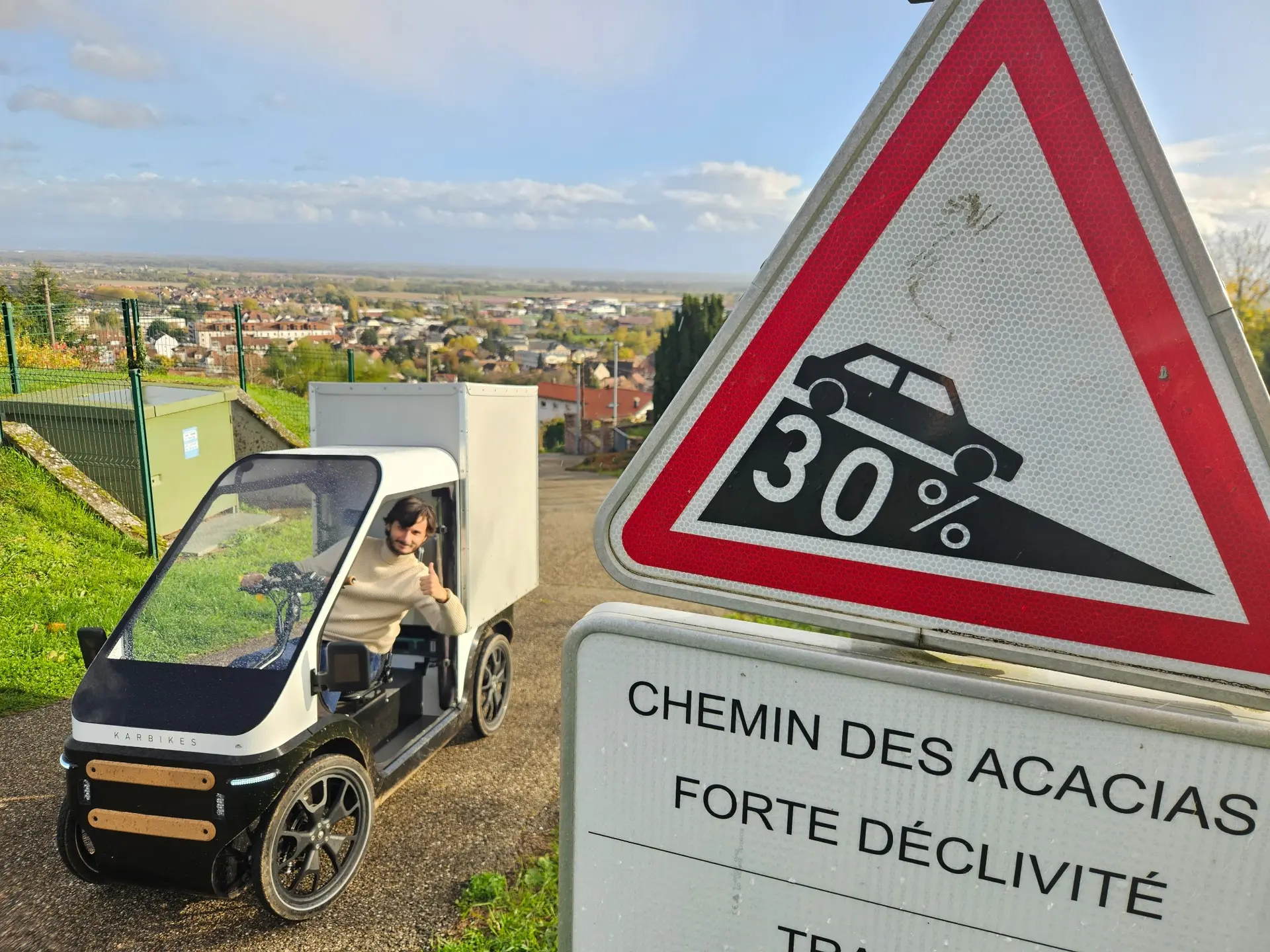
A stage of development between pre-production, production and bringing partners on board.
An overview of the prototype's evolution and the gradual development of the concept into a physical vehicle.
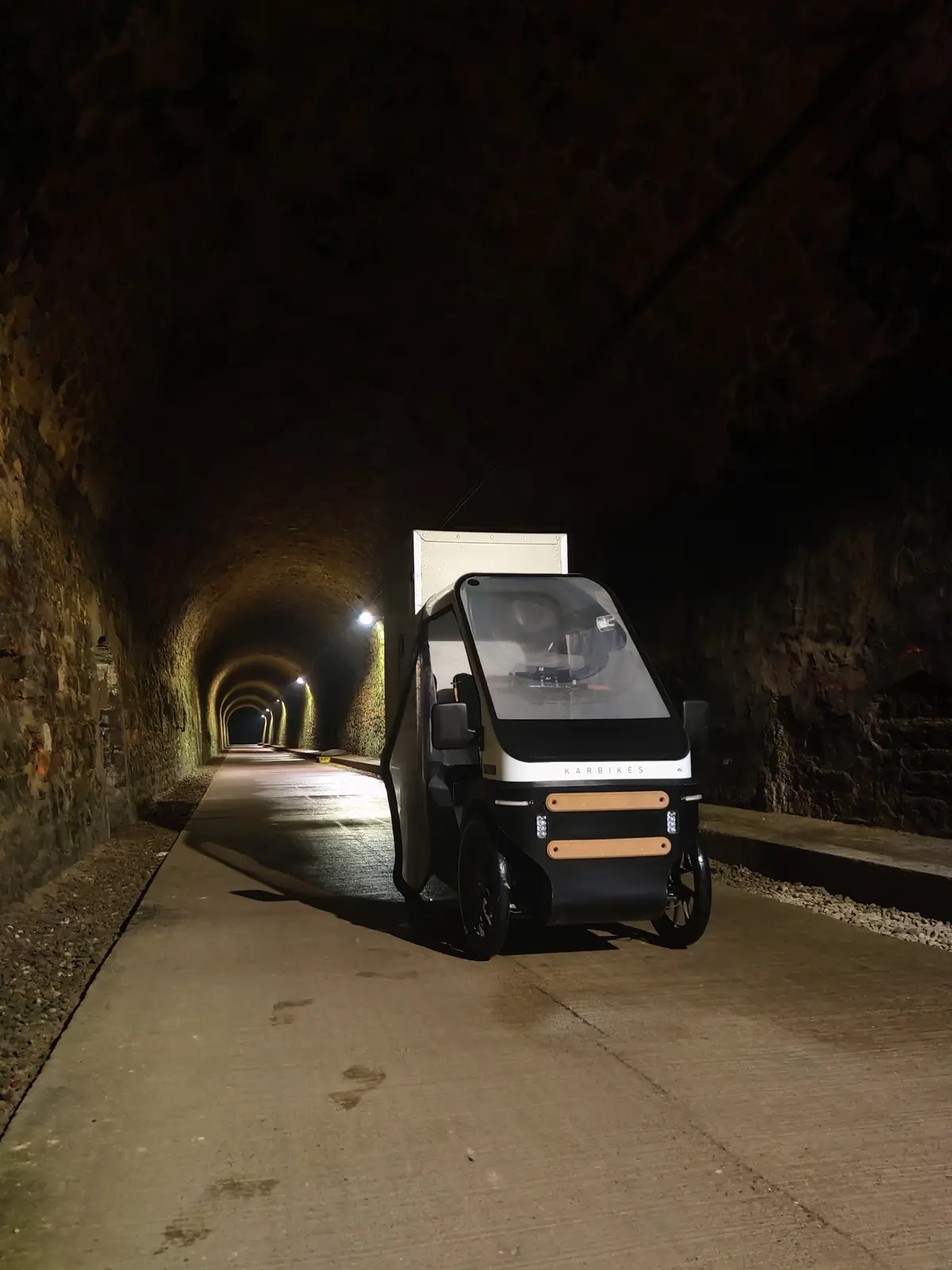
A short presentation of the vehicle at the Mulhouse fair.
The first public presentation of the project as part of ADEME's eXtrême Défi.
SOURCES AND FURTHER READING