Äerdschëff asblMOBILAB · investigate before deciding

Transition Lab · educational strand in preparation · 2027–2028 outlook

Learn through engagement.

Transition Lab LTC-PSP is the educational strand shared by the three projects ZFT Sud, ZFT Nord and TNT Chiers-Alzette, with the Lycée technique du Centre as the proposed school. The proposed pathway enables young people to take part in action research on mobility, create a board game from their findings and learn to facilitate it with other young people.

The approach

Young people learn by doing.

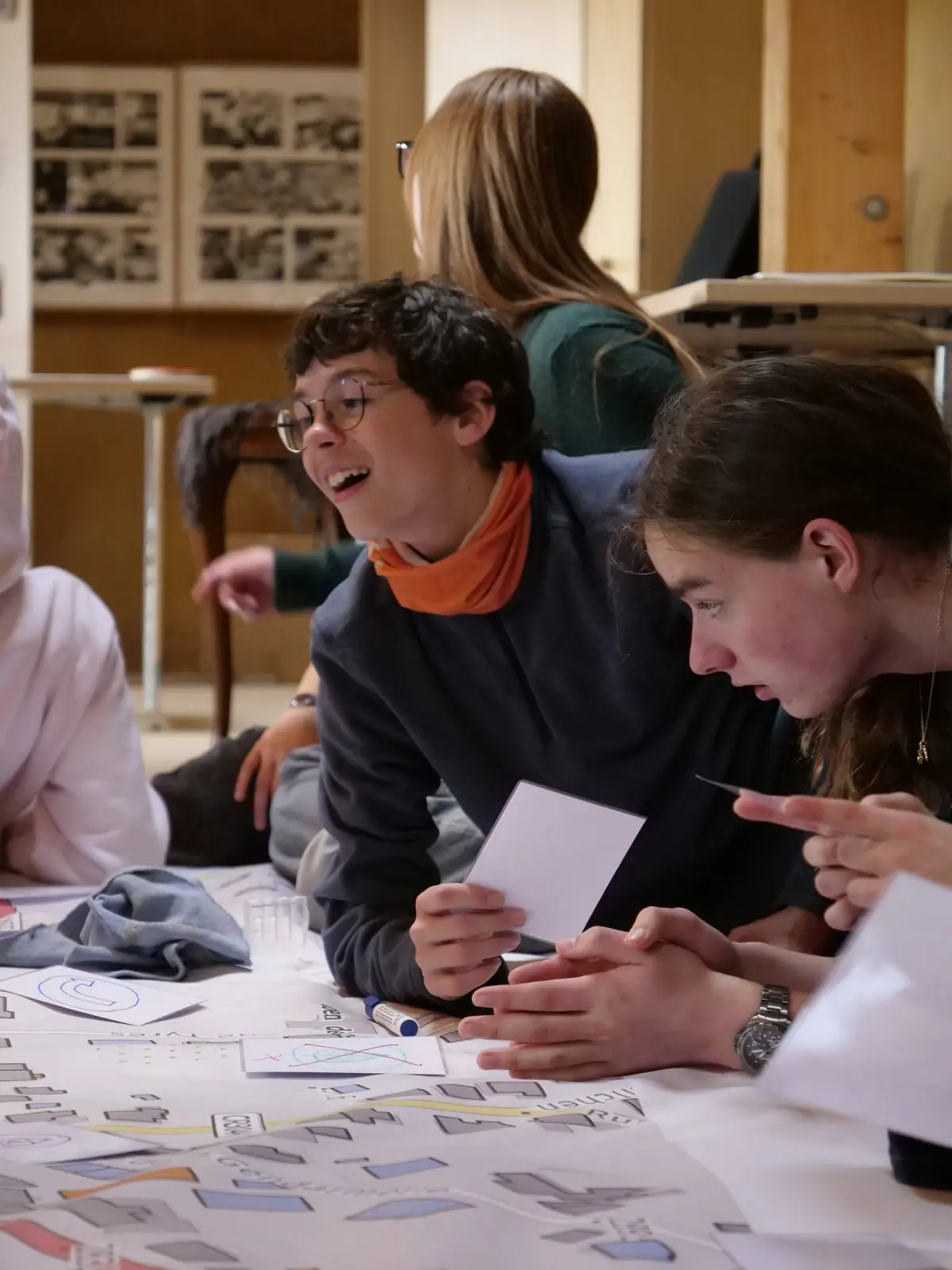
The project does not place young people at the end of the chain. They take part at every stage: choosing a question, investigating, analysing, creating, testing and sharing. Their observations inform the action research.

The working scenario envisages a core group of 15 to 20 pupils in 2027. Of these, the aim is for 8 to 14 to co-facilitate at least one session and for 6 to 10 to achieve supervised autonomy. Four to eight associated classes could take part in 8 to 12 peer-led sessions. A second cohort taking over in 2028 is envisaged, subject to approval.

Pilot reference points

Indicative targets to be confirmed.

These targets from the dossier of 5 September remain subject to educational agreements and available resources. They describe a shared pathway, without tripling cohorts or sessions across the three territories. Individual pupils, attendances and sessions are counted separately.

CORE GROUP 202715-20

Pupils involved in inquiry, co-design and facilitation.

ASSOCIATED CLASSES4-8

Around 80 to 150 pupils beyond the core group.

PEER-LED SESSIONS8-12

With a responsible adult present.

PROTOTYPES4-6

Then up to 25 kits, only after a decision gate.

Educational pathway

From investigation to facilitating the game.

The aim is not to persuade pupils to use a vehicle. They learn to distinguish an opinion, a hypothesis, a piece of data, an interpretation and a recommendation.

01

Investigate

A stable core group documents real situations, the people involved, their constraints and alternatives.

02

Build the evidence

Each card connects a source, a method, a scope, a limitation and an uncertainty.

03

Co-design

Pupils turn the material into roles, dilemmas, rules and testable game prototypes.

04

Facilitate

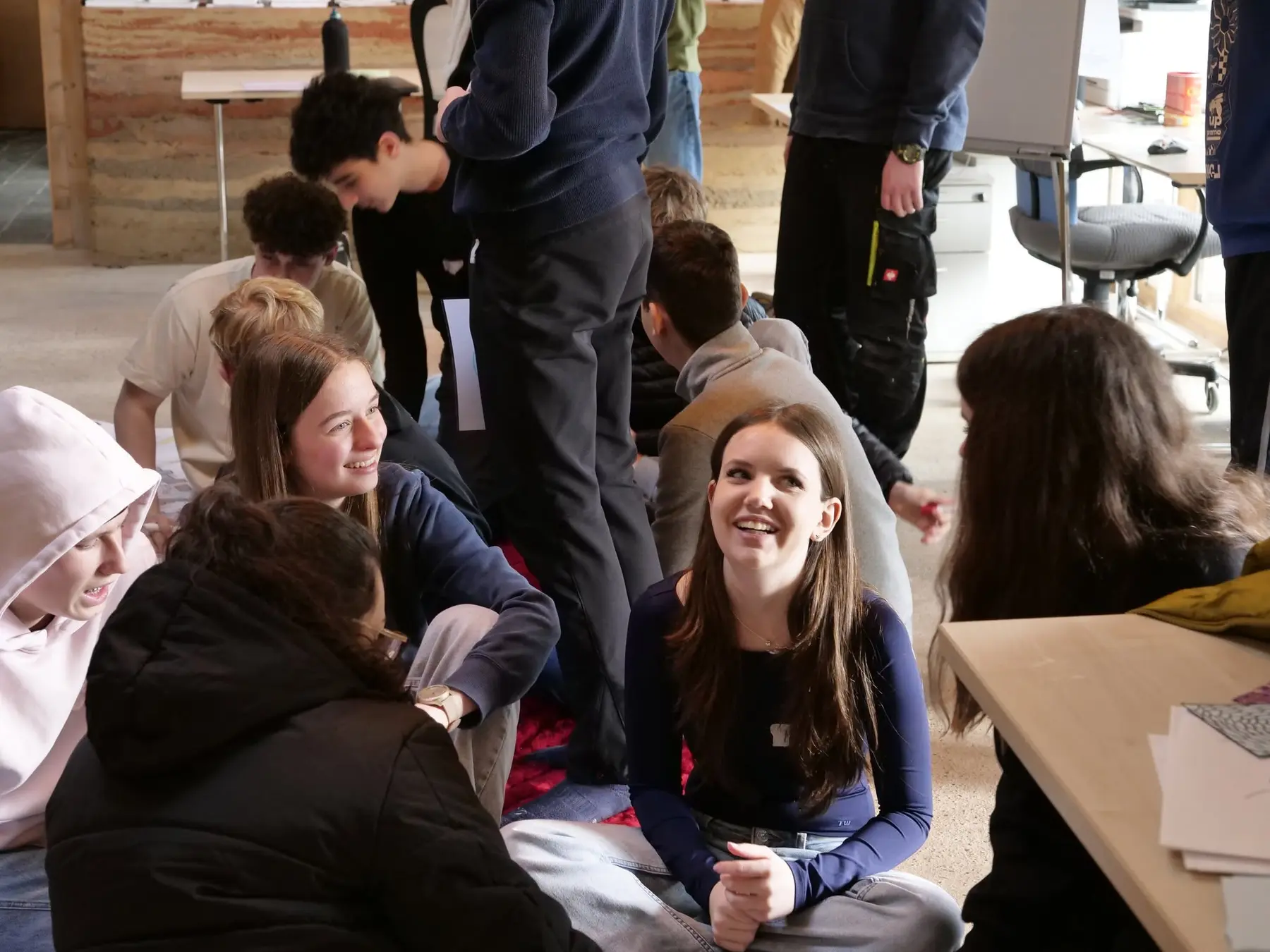
They learn to share speaking time, bring disagreements to light and guide a decision without steering its outcome.

05

Pass it on

A second cohort could revisit, challenge and improve the work in 2028, if this extension is approved.

One project

Several outputs, one educational approach.

Transition Lab connects the school pathway, action research, game creation and its use with other young people.

01

Action research with young people

Young people observe real situations, ask questions, gather information and compare different perspectives.

02

A board game created by young people

They turn the findings into cards, roles, dilemmas and rules, then build several prototypes.

03

Game sessions led by young people for their peers

They test the game, learn to enable everyone to speak and lead sessions with other classes.

04

Passing knowledge between cohorts

If continuation in 2028 is approved, a new cohort takes up the records, evaluates the game and improves the work.

The 2027 PSP cycle focuses on science communication, particularly evidence labs, prototypes and game evaluation. It forms part of the LTC 2027–2028 pathway. A possible 2028 cohort will be decided on after the 2027 review.

Provisional decision timetable

Every new stage requires approval.

No trial or collection of identifiable data begins before legal, ethical, insurance, technical and data-related approval.

2026

Establish safeguards

LTC agreement, adult contacts, safeguarding, scientific partners, budget and analytical separation.

03.2027

Validate the corpus

Question, charter, tools, baseline data and first prototype.

07.2027

Decide on the game

Revise, produce or suspend after testing 4 to 6 prototypes.

END OF 2027 · POSSIBLE CONTINUATION IN 2028

Decide on the next steps

Evaluate the pilot, then decide whether to maintain, adapt, extend or stop. A follow-up review would take place in 2028 if continuation is approved.

Coordination

Tarik Bouriachi

Äerdschëff asbl · Transition Lab · presentation revised on 5 September 2026.